
- 29 July 2025
- JST 17:20 - 17:50 (GMT+09:00)
- 503 + Online
- Simultaneous interpretation
Wrap-Up and Key Messages
Before viewing
This footage is a direct recording of the meeting proceedings, and therefore it contains parts in both Japanese and English.
Please use the YouTube subtitles (CC) function as needed.
- Click the settings icon at the bottom right of the video screen.
- Select “subtitles” → “English (auto-generated)”.
- Under “English (auto-generated)”, select “auto-translate” and choose your preferred language.
Note: For example, if you select Japanese, subtitles will not be displayed for Japanese speech, and only the English portions will be shown with Japanese auto-translation.
We appreciate your understanding and cooperation.
Closing remarks
ONO Hiroshi, Executive Director of IGES, expressed his gratitude to the supporting organisations, speakers and participants at this year’s ISAP. He then reviewed the discussions from each session and reported on the key points, based on a summary prepared by members of the NGO "Climate Youth Japan." In Plenary Session 1, it was shared that in order to enhance sustainability and security in the Asia-Pacific amidst the triple crisis, maximising common interests through synergy is indispensable, requiring cooperation beyond governance levels, as well as funding and capacity building. In Plenary Session 2, proposals were made for immediate action based on the Global Stocktake and strengthening synergies between climate change measures and social issues, looking ahead to COP30. In Plenary Session 3, it was confirmed that for ASEAN's net-zero transition, mainstreaming social inclusion to leave no vulnerable groups behind is essential, necessitating the establishment of a just framework and collaboration with diverse stakeholders. In Plenary Session 4, discussions focused on promoting private sector participation in regional Circular and Ecological Spheres (CES), highlighting the importance of shifting perspective to view corporate value as a multifaceted indicator that includes social and environmental values. In Plenary Session 5, it was stated that through international projects led by IGES, the co-benefits of climate change mitigation and health in cities are being visualised, which is expected to lead to changes in citizen behaviour.
Next, YAMAZAKI Taishi and KITAGAWA Sakurako reported on the interactive sessions with young participants. In Session 1, which focused on meaningful youth engagement in the environmental field, the speakers presented their action plans. Recommendations emphasised creating synergy through collaboration between different sectors and organisations, and building win-win relationships for young people. Interactive Session 2 brought together the students who visited advanced SDGs model regions across Japan and the local stakeholders who hosted their visits. Participants shared what they learned and engaged in active discussions about what kind of SDG leaders they would like to become in a sustainable society.
Finally, Mr. Ono summarised the ISAP discussions, emphasising the need to scale down global issues to the regional level and scale up regional issues to the global level. He also explained that ISAP will continue over the next few months, with various thematic sessions. He concluded that strengthening synergy, which aims for integrated solutions to various challenges based on the concept of a just transition, will accelerate the implementation of the SDGs and lead to effective responses to the triple crisis.
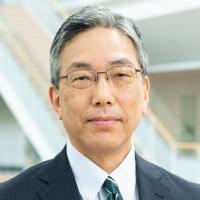
ONO Hiroshi
Executive Director, IGES
Student, Graduate School of Energy Science, Kyoto University

KITAGAWA Sakurako
Student, Graduate School of Energy Science, Kyoto University
Sakurako Kitagawa became interested in decentralized energy systems after experiencing the Great East Japan Earthquake and the resulting power outages when she was in the third grade of elementary school.
The inconvenience of life without electricity, along with a sense of discomfort toward the structure of the current energy system, sparked her interest.
She studied energy from an engineering perspective at the Faculty of Engineering, Tohoku University. Motivated by a desire to consider energy issues from a more multifaceted viewpoint, she is now continuing her studies at Kyoto University’s Graduate School of Energy Science. Her current research explores whether decentralized energy systems—which require long-term investment recovery—can be economically and socially sustainable in regional areas of Japan, where population decline and decreasing demand are anticipated. She is also interested in how the traditional ways of life, cultural practices, artisanal techniques, and temples and shrines—passed down over generations in these regions—can be preserved and revitalized for the future. Her work focuses on the intersection of regional sustainability and decentralized renewable energy systems.
-min.JPG)
-min.JPG)
-min.JPG)
-min.JPG)
-min.JPG)
-min.JPG)
-min.JPG)
-min.JPG)
-min.JPG)
-min.JPG)
-min.JPG)
-min.JPG)