
- 29 July 2025
- JST 14:40 - 15:40 (GMT+09:00)
- 503 + Online
- Simultaneous interpretation
Mobilising Private Sector Engagement in the Circulating and Ecological Sphere for Synergistic Local Climate Actions and Sustainability
Before viewing
This footage is a direct recording of the meeting proceedings, and therefore it contains parts in both Japanese and English.
Please use the YouTube subtitles (CC) function as needed.
- Click the settings icon at the bottom right of the video screen.
- Select “subtitles” → “English (auto-generated)”.
- Under “English (auto-generated)”, select “auto-translate” and choose your preferred language.
Note: For example, if you select Japanese, subtitles will not be displayed for Japanese speech, and only the English portions will be shown with Japanese auto-translation.
We appreciate your understanding and cooperation.
Summary
The session emphasised the importance of comprehensive, impactful local-level initiatives in accelerating synergistic actions on climate change and sustainability. It highlighted the private sector’s potential to help build a sustainable society through collaboration with local communities and municipalities, while also noting that current engagement remains fragmented and hindered by trust-building challenges. To address these issues, integrated institutional and structural frameworks are essential, with the Circulating and Ecological Sphere (CES) approach gaining recognition as a practical solution.
Comprehensive and impactful local-level initiatives are indispensable for accelerating synergic actions on climate change and sustainability. The private sector has the potential to help build a sustainable society through collaboration with local communities and municipalities, while also noting that current engagement remains fragmented and hindered by trust-building challenges.
This session focused on the Regional Circulating and Ecological Sphere (RCES) approach, which is drawing attention as a practical means of fostering synergies, and presented examples of private sector participation. The first speaker outlined company efforts to achieve net-zero emissions by 2050, highlighting Ricoh’s role as Japan’s first RE100 member and its promotion of renewable energy through community-based Power Purchase Agreements (PPA) and comprehensive cooperation with municipalities. The company further reinforces ESG (Environmental, Social, and Governance) management by linking executive compensation to sustainability goals. The second speaker outlined ongoing initiatives to reduce household emissions and encourage behavioural change among citizens, while also working with local SMEs to cut emissions across supply chains and advance a circular economy. Additional efforts include wind power generation, heat supply systems, designation as a decarbonisation-leading area, interregional cooperation, and the development of sustainable aviation fuel (SAF).
The third speaker showcased innovative work in Bangladesh, where a market-based integrated model has been developed to deliver renewable energy to off-grid rural areas, reaching millions of people. By challenging the assumption that renewable technologies are unsuitable for rural regions, potential has been demonstrated for sustainable regional development. Through innovative financing and technician training, solar home systems (SHS) have been widely deployed, improving both energy access and quality of life.
Finally, discussions on promoting private sector involvement in CES frameworks underscored the importance of collaboration among businesses, governments, and local communities. Model projects were noted as crucial for building trust and enabling broader implementation. Strategic returns, such as enhanced brand value and future business opportunities, were highlighted, encouraging a shift toward evaluating corporate value through multidimensional indicators that encompass social and environmental factors. Such collaboration is expected to play a central role in shaping future policy and corporate strategy, essential for fostering a sustainable environment and society.
Summary written by: Vibhas SUKHWANI (IGES) | Fanghsuan YU and HORIOKA Akari, Climate Youtu Japan (CYJ)
Panel Discussion
, Executive Manager, Sumitomo Mitsui Trust Bank, Limited
Executive Manager, Sumitomo Mitsui Trust Bank, Limited

KANAI Tsukasa
Executive Manager, Sumitomo Mitsui Trust Bank, Limited
Tsukasa Kanai joined Sumitomo Trust and Banking Co., Ltd. in 1983. In 2003, he spearheaded the establishment of the sustainability department, and since 2018, he has held his current position. During this time, he was involved in developing the company's sustainability management foundation, creating SRI (ESG) funds, launching environmental real estate operations, developing Positive Impact Finance, and forming the Technology-Based Finance team. He served as the first chairperson of the steering committee for both "Principles for Financial Action for the 21st Century" and "Japan Impact-driven Financing Initiative" He is also a member of various committees for organizations such as the Ministry of the Environment, the Financial Services Agency, and the Cabinet Office. He has authored numerous books and articles.
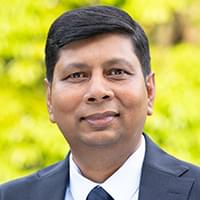
Bijon Kumar MITRA
Research Director, Integrated Sustainability Centre, IGES

KADOBAYASHI Hirohide
Executive Director for Zero Carbon Society Promotion Department, Zero Carbon and GREEN×EXPO Promotion Bureau, City of Yokohama
General Manager, ESG Center, ESG Strategy Division, Ricoh Co., Ltd.
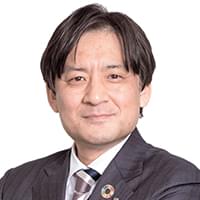
ABE Satoshi
General Manager, ESG Center, ESG Strategy Division, Ricoh Co., Ltd.
Mr. Abe joined Ricoh in 1992. After working in the Sales Division, he was transferred to the Environmental Department in 1999, where he was in charge of environment communication.
In April 2008, he was seconded to KEIZAI DOYUKAI (Japan Association of Corporate Executives) and engaged in Global Environment Committee activities. Since 2016, as General Manager of the Sustainability Division, he has been responsible for developing and promoting the company-wide sustainability strategy and has been involved in the declaration of participation in RE100, Science-based Target accreditation and integration of SDGs/ESGs into the corporate management strategy. He is also one of the deputy representatives of the Japan Climate Leaders’ Partnership (JCLP).
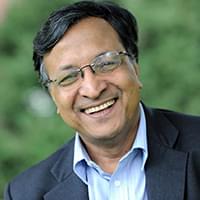
Dipal Chandra BARUA
Founder and Chairman, Bright Green Energy Foundation (BGEF)
-min.JPG)
-min.JPG)
-min.JPG)
-min.JPG)
-min.JPG)
-min.JPG)
-min.JPG)
-min.JPG)
-min.JPG)
-min.JPG)
-min.JPG)
-min.JPG)