Recorded Video
Before viewing
This footage is a direct recording of the meeting proceedings, and therefore it contains parts in both Japanese and English.
Please use the YouTube subtitles (CC) function as needed.
- Click the settings icon at the bottom right of the video screen.
- Select "subtitles" → "English (auto-generated)".
- Under "English (auto-generated)", select "auto-translate" and choose your preferred language.
Note: For example, if you select Japanese, subtitles will not be displayed for Japanese speech, and only the English portions will be shown with Japanese auto-translation.
We appreciate your understanding and cooperation.
Summary
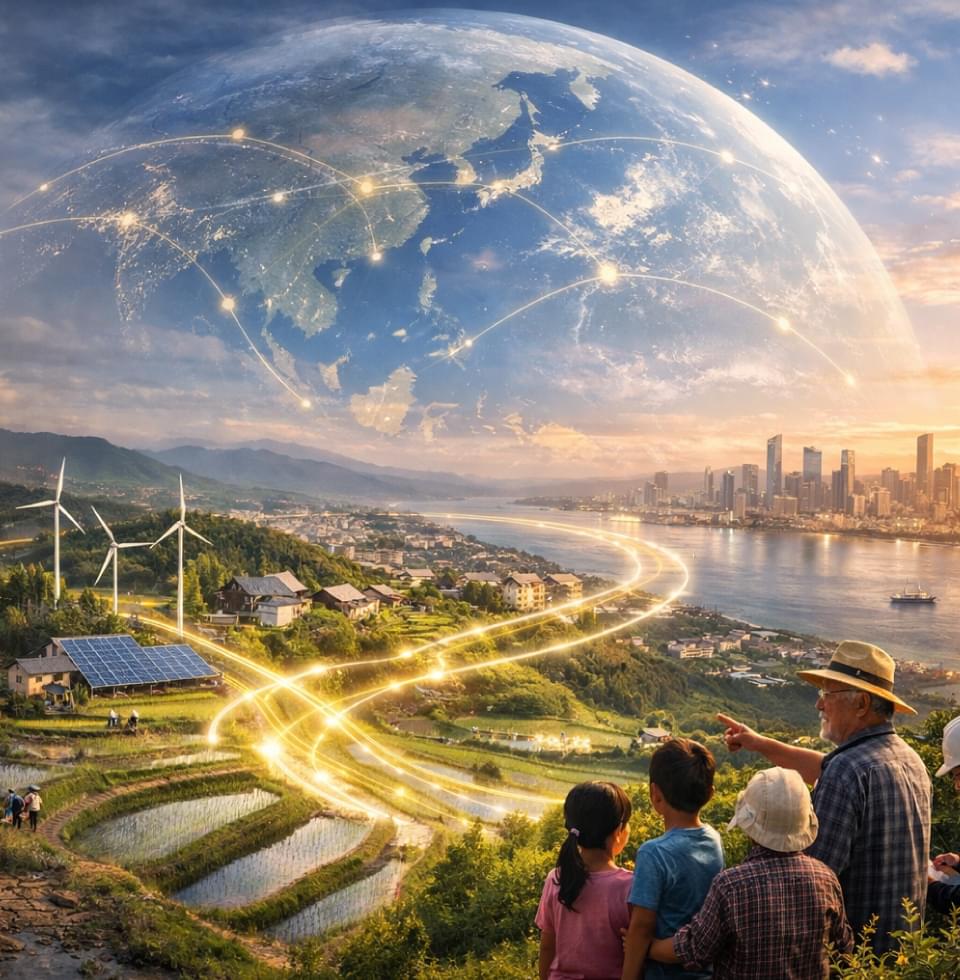
The moderator outlined the concept of climate security, which views climate change as a security risk that threatens food, water, human and economic security in a chain reaction, potentially increasing the risk of conflict. She also outlined the Ministry of Foreign Affairs-funded project "Ensuring Security in Japan and the Indo-Pacific under Climate Change: A Focus on the Linkages with Economic Security," which began in FY2026. Through four research areas—food and energy security, the defence of sea lanes, the regionalisation of climate security and international rule-making—the project aims to contribute to stability in Japan and the Indo-Pacific.
The first speaker outlined three pathways through which climate change affects traditional security: greenhouse gas emissions from the military, physical impacts on military facilities and equipment and the growing complexity of the security environment. On the maritime order, he noted the changing importance of sea lanes due to decarbonisation, and the risk that rising sea levels could submerge islands and atolls, leading to the loss of territorial waters and Exclusive Economic Zones (EEZs). Citing the potential submersion of Okinotorishima, he warned of the risk of losing an EEZ larger than Japan's land area and of escalating tensions with China. He also outlined a three-year research project examining comparative policy analysis, public opinion surveys, and the power struggle between the US, China and Russia over Arctic shipping routes.
The second speaker described the Indo-Pacific as facing a double crisis of intensifying geopolitical tensions and amplified climate threats. She identified key challenges: climate security discussions often fail to reflect local social and cultural contexts, and climate adaptation risks being politicised as a tool for certain countries to expand influence. She outlined research toward an Integrated Regional Climate Security Framework, developed with ASEAN and Pacific Island countries, combining top-down international discussion with bottom-up local insight—linking early warning systems with adaptation and humanitarian aid, while emphasising resilience rooted in traditional knowledge and local culture.
The third speaker traced the history of the environment and security debate, explaining how climate change acts as a threat multiplier, driving migration, resource competition, political instability, and conflict through resource vulnerability. After reviewing UN developments on climate security since the 2007 Security Council debate and introducing the Climate Security Mechanism, he outlined a research direction integrating UN diplomacy, economic diplomacy, and climate diplomacy to support stability and economic security in the Indo-Pacific amid shifts in the UN system and the restructuring of climate governance.
The final speaker introduced the "HIKESHI DNA" that SOMPO Japan has upheld since its founding in 1888, noting that its origins in protecting people from fire have evolved into solutions for today's challenges, including disaster prevention amid increasingly severe natural disasters. Under its SOMPO Earth Positive Actions strategy, the company promotes a synergy approach integrating climate change, biodiversity and the circular economy, highlighted through initiatives such as the OECM 100 Sites Project, the SAVE JAPAN Project and the CSO Learning Programme.
Prepared by: KURUSHIMA Kei (IGES)
Panel Discussion
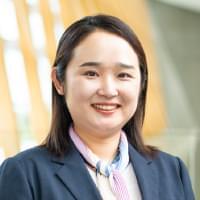
Moderator
KURUSHIMA Kei
Chief Policy Researcher / Lens Facilitator, Climate Change, IGES
Speaker Profile本文
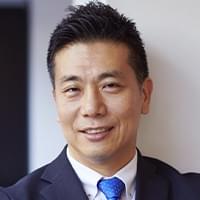

Panelist
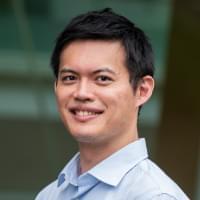
KIMURA Naoko
Policy Researcher, Climate Change Unit, IGES
Panelist
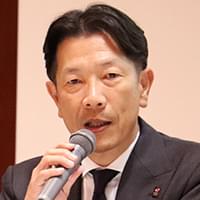
KATO Taku
Leader of Sustainability Promotion, Culture Transformation Department, Sompo Japan Insurance Inc.
-min.JPG)
-min.JPG)
-min.JPG)
-min.JPG)
-min.JPG)
-min.JPG)
-min.JPG)
-min.JPG)
-min.JPG)
-min.JPG)