Recorded Video
Before viewing
This footage is a direct recording of the meeting proceedings, and therefore it contains parts in both Japanese and English.
Please use the YouTube subtitles (CC) function as needed.
- Click the settings icon at the bottom right of the video screen.
- Select "subtitles" → "English (auto-generated)".
- Under "English (auto-generated)", select "auto-translate" and choose your preferred language.
Note: For example, if you select Japanese, subtitles will not be displayed for Japanese speech, and only the English portions will be shown with Japanese auto-translation.
We appreciate your understanding and cooperation.
Summary
This session, under the theme "Synergistic Approaches for Climate Change Action and Biodiversity Conservation," presented practical examples and insights from Japan and other countries on integrated approaches that use coastal ecosystems.
The first speaker presented examples of kelp and nori cultivation in Yokohama City and Hyogo Prefecture. These examples showed that blue carbon initiatives can create multifaceted value beyond decarbonisation, including biodiversity conservation and the revitalisation of local economies. The presentation also highlighted the importance of evaluating environmental value quantitatively and establishing mechanisms that channel funding back to implementing organisations.
The second speaker presented examples from tropical coastal areas in Malaysia and Indonesia. These examples showed that Ecosystem-based Disaster Risk Reduction (Eco-DRR), using mangroves and coral reefs, can simultaneously reduce disaster risk and conserve biodiversity. The presentation also provided concrete examples of how scientific knowledge can inform policy, including the adoption of a Coastal Vulnerability Index that incorporates social vulnerability into national policy.
In the subsequent discussion, moderated by the APN Director, participants agreed that translating synergies from theory into practice requires people who can connect stakeholders across sectors. It also requires mechanisms that enable local communities to participate in decision making and take ownership, and partnerships among diverse stakeholders.
Prepared by: Mami Oda (APN)
Panel Discussion
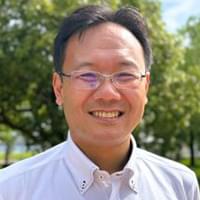
Moderator
YAMASAKI Toshiyuki
Director, Asia-Pacific Network for Global Change Research
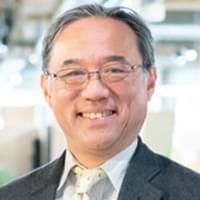
Panelist
NOBUTOKI Masato
Invited Professor, Carbon Neutral Promotion Headquarters, Kobe University
A native of Wakayama City, Japan, Masato Nobutoki graduated from the Department of Urban Engineering, Faculty of Engineering, the University of Tokyo.
He currently serves as Director, EX Research Institute Ltd.; Invited Professor, Carbon Neutral Promotion Headquarters, Kobe University; Head of the Kobe SDGs Promotion Operational Unit; Board Member of the Japan Blue Economy Association (JBE); Adjunct Lecturer, Master's Program in Sustainable Urban Regeneration, the University of Tokyo; and Special Adviser to Wakayama City, among other positions.
After graduating from university, he worked for Mitsubishi Corporation, where he was engaged in the information industry, urban development, and financial services sectors. He subsequently joined the Japan Association for the 2005 World Exposition, where he served as Director of the Government Exhibitions Planning and Events Office. He later held positions as Specially Appointed Professor at the Graduate School of the University of Tokyo and as a senior official of the City of Yokohama, serving as Director General of the Climate Change Policy Headquarters and Director General of the Urban Management Bureau, where he spearheaded initiatives including the Yokohama Smart City Project (YSCP).
He also previously served as an Outside Audit & Supervisory Board Member of Tokyo Gas Co., Ltd. and as Director of the YOKOHAMA SDGs Design Center.
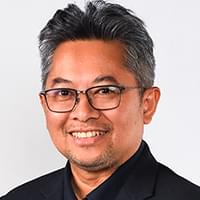
Panelist
Aidy Mohamed Shawal BIN M. MUSLIM
Professor and Head, Remote Sensing and Marine Informatics, Institute of Oceanography and Environment (INOS), Universiti Malaysia Terengganu (UMT)
Prof Aidy Mohamed Shawal Bin M. Muslim is a Full Professor at the Institute of Oceanography and Environment, Universiti MalaysiaTerengganu (UMT), Malaysia. He began his career in 1995 as a researcher at the Malaysia Centre for Remote Sensing and later earned his PhD in Remote Sensing from the University of Southampton in 2004.
He has contributed extensively to national committees on project development, strategic planning and the advancement of space‐based technologies, and has represented the Malaysian Government in numerous international meetings. His research spans remote sensing, GIS, and geospatial data management, covering natural resource assessment, environmental and disaster monitoring, and national‐level strategic planning. His current research focuses on multispectral sensors and UAV technologies for mapping benthic habitats and coastal ecosystems.
Prof Muslim is also deeply engaged with the Intergovernmental Oceanographic Commission (IOC). He serves on several steering groups and expert teams, contributing to initiatives such as IODE capacity development, data and information management, and regional coordination mechanisms. His involvement supports training, governance, quality assurance, and the strengthening of national and regional ocean data infrastructures.
-min.JPG)
-min.JPG)
-min.JPG)
-min.JPG)
-min.JPG)
-min.JPG)
-min.JPG)
-min.JPG)
-min.JPG)
-min.JPG)
-min.JPG)
-min.JPG)