
Recorded Video
Before viewing
This footage is a direct recording of the meeting proceedings, and therefore it contains parts in both Japanese and English.
Please use the YouTube subtitles (CC) function as needed.
- Click the settings icon at the bottom right of the video screen.
- Select "subtitles" → "English (auto-generated)".
- Under "English (auto-generated)", select "auto-translate" and choose your preferred language.
Note: For example, if you select Japanese, subtitles will not be displayed for Japanese speech, and only the English portions will be shown with Japanese auto-translation.
We appreciate your understanding and cooperation.
Summary
This year's plenary session examined how synergies can be translated from international commitments into practical local action and then scaled across Asia and the Pacific. Rather than treating climate change, biodiversity loss, pollution and slow SDG progress as separate problems, the discussion focused on how one well-designed initiative can create several positive outcomes at the same time. The Keynote Speaker introduced the Regional Programme of Action adopted in July 2026. She explained that its four pillars—climate change, biodiversity and nature-positive development; pollution and the circular economy, and cities and resilience—must be supported by governance, finance and data. Her central message was simple: regional agreement is only a starting point, and it must be made usable for local and subnational authorities.
The moderator presented the Asia-Pacific Synergies Report as a collaborative effort involving more than 50 authors and around 30 reviewers. Noting that current trends could delay SDG achievement until around 2060, he outlined four accessible entry points: health-centred climate action, nature-positive nexus approaches, the circular economy and cities, as delivery platforms. He stressed that the report's 36 detailed cases and 147 additional regional examples can help connect local practice with policy, investment, data and institutions.
The first speaker described the report as a call for urgent action, arguing that climate impacts are already threatening lives and livelihoods and that the next five years will be decisive.
Drawing on solar power in Pakistan and electric mobility in Nepal, he proposed country-specific implementation strategies that combine affordable clean technologies with technology transfer, local manufacturing, employment and industrial development rather than relying only on equipment exports.
The second speaker explained that the SDGs are not simply idealistic goals, but a practical agreement forged by 193 countries balancing national and global interests and short- and long-term needs. He highlighted Japan's experience of local governments, businesses, civil society and research organisations working together for SDGs and finding realistic ways forward under real constraints. He encouraged Japan to share these lessons with the world.
The third speaker introduced Hyogo Prefecture's Hokusetsu Satoyama Circulating and Ecological Sphere, sustainable fashion initiatives, the High School Environmental Future Leaders Project and the Hyogo Future Environment Conference. These examples connect decarbonisation, coexistence with nature, resource circulation, local economies and human-resource development through activities rooted in everyday life, while treating younger generations as partners in policy design and local transformation. The discussion concluded that implementation should begin with manageable steps suited to local conditions, visible economic and social benefits, as well as stronger links among people, finance, technology and data across departmental and organisational boundaries. Synergies can also help make well-being more concrete by connecting environmental quality, livelihoods, inclusion and community resilience. The next step is to build a two-way cycle: gather local knowledge carefully, bring it into regional and global debates, and return international momentum and learning to practical action in communities. This creates a practical bridge between global ambition, regional cooperation and the realities of local implementation.
Prepared by: FUJINO Junichi (IGES)
Keynote Speech
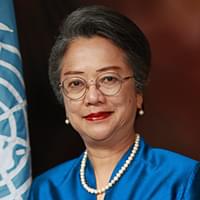
Armida Salsiah ALISJAHBANA
Under-Secretary-General of the United Nations / Executive Secretary, United Nations Economic and Social Commission for Asia and the Pacific (ESCAP) [video]
Panel Discussion
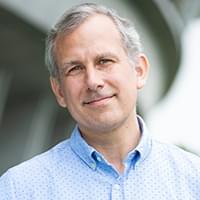
Moderator
Eric ZUSMAN
Programme Director / Director of Integrated Sustainability Centre, IGES
Panelist
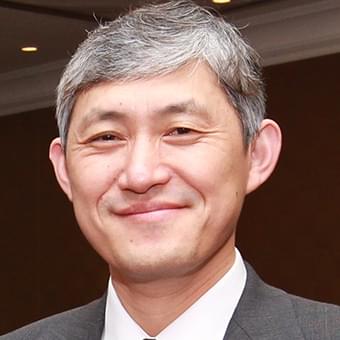
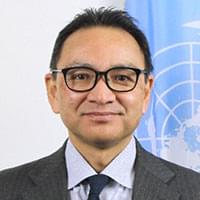
TAKADA Minoru
Team Leader on Energy at the Division for Sustainable Development Goals/ Deputy Director of Forum on Forests Secretariat, Department of Economic and Social Affairs, United Nations
After serving as a Japan Overseas Cooperation Volunteer (JOCV) in Ghana, he worked at the UNDP Angola office before joining the Bureau for Development Policy's Environment and Energy Group at the UNDP Headquarters in New York, where he later served as the Sustainable Energy Programme Leader. He then transitioned to the Executive Office of the Secretary-General (EOSG) under Ban Ki-moon, holding key positions as Senior Energy Policy Advisor and Representative of the Sustainable Energy for All (SEforALL) New York Office. From 2017, he served as the Team Leader for Sustainable Energy and Climate Change within the Division for Sustainable Development Goals at the United Nations Department of Economic and Social Affairs (UNDESA), and has been in his current position since late 2023. He also served as the President of the Association of Japanese UN Staff Members in New York from 2019 to 2021.

Panelist
UENISHI Kotoko
Chief Executive Officer of the Environmental Management Department, Hyogo Prefecture
UENISHI Kotoko joined the Hyogo Prefectural Government in 1992 as a Technical Environmental Officer. After serving as Director of the Environmental Impact Assessment Office, Environmental Management Bureau, Agricultural Environmental Affairs Department in 2017, Director of the Water Air Quality Control Division in 2019, and Director of the Global Warming Solutions Division in 2021, she became Director General of the Environmental Management Department in 2022. In April 2026, she was appointed Chief Executive Officer of the Environmental Management Department, a position she continues to hold.
-min.JPG)
-min.JPG)
-min.JPG)
-min.JPG)
-min.JPG)
-min.JPG)
-min.JPG)
-min.JPG)
-min.JPG)
-min.JPG)
-min.JPG)
-min.JPG)