Recorded Video
Before viewing
This footage is a direct recording of the meeting proceedings, and therefore it contains parts in both Japanese and English.
Please use the YouTube subtitles (CC) function as needed.
- Click the settings icon at the bottom right of the video screen.
- Select "subtitles" → "English (auto-generated)".
- Under "English (auto-generated)", select "auto-translate" and choose your preferred language.
Note: For example, if you select Japanese, subtitles will not be displayed for Japanese speech, and only the English portions will be shown with Japanese auto-translation.
We appreciate your understanding and cooperation.
Summary
This thematic session examined how scientific projections of urban pluvial flooding, water scarcity and climate-related disaster risks can inform the development of resilient and sustainable cities under a changing climate. The first speaker demonstrated that incorporating both urban-induced modifications to thermal and wind fields and the effects of atmospheric pollutants into meteorological models improves the representation of the location and peak timing of urban extreme rainfall events. Such advances could support timely evacuation decisions and more effective drainage management. The second speaker presented an urban water-resource assessment framework that integrates water-distribution networks and external water sources into a global water-resource model. This approach enables the evaluation of city-specific water scarcity risks that are difficult to capture through conventional grid- or river-basin-based assessments. The third speaker reported findings from large-ensemble simulations covering approximately 400 major cities worldwide, indicating that global warming is likely to increase the risks of extreme heat, heavy rainfall and severe drought. The analysis further suggested that climate tipping events could substantially exacerbate inundation risks in coastal cities. The panel discussion emphasised the need to translate scientific projections into actionable indicators that can be readily used by local governments. It also highlighted the importance of interdepartmental coordination, the maintenance of water sources and infrastructure, demand-side water management, and inclusive risk communication across generations. Overall, the session underscored that translating scientific knowledge into concrete actions by governments, businesses and citizens is essential for strengthening urban resilience.
Prepared by: AIZAWA Emi (ERCA)
Programme
MC
AIZAWA Emi
Manager, Fund Management Division, Department of Environment Research and Technology Development Fund, Environmental Restoration and Conservation Agency (ERCA)
Opening Remarks
TOJO Junji
Executive Managing Direcor,Environmental Restoration and Conservation Agency (ERCA)
Moderator
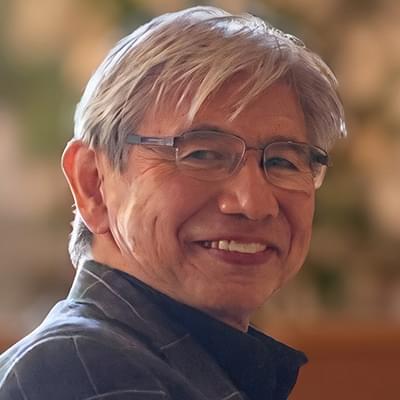
HARADA Koh
Program Officer, Environment Research and Technology Development Fund Department, Environmental Restoration and Conservation Agency (ERCA)
Koh Harada is Program Officer of the Environmental Research and Technology Development Fund. He received his M.S. in Fisheries Chemistry from Hokkaido University and earned a Ph.D. in Fisheries Science. He previously served as Director of the Environmental Management Research Institute and Director General of the Tohoku Center at the National Institute of Advanced Industrial Science and Technology (AIST), and later as a Board Member of the Tokyo Metropolitan Industrial Technology Research Institute (TIRI). His expertise includes geochemistry and marine chemistry, with research focusing on natural radioisotopes in marine environments, ocean carbon cycling, environmental impact assessment of marine industrial activities, and international standardization activities.
Presenter
Development of Urban Localized Heavy Rainfall Predicting Technology for Urban Disaster Prevention
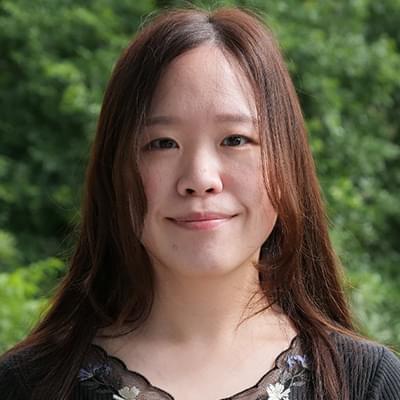
KAWANO Natsumi
Senior Staff Member, Global warming countermeasures group, Center for Environmental Science in Saitama
Dr. Kawano is a researcher specializing in global warming countermeasures at the Center for Environmental Science in Saitama (CESS). She earned her Doctor of Engineering from the Tokyo Institute of Technology in 2018. Expert in urban meteorology, she has experience in simulating atmospheric phenomena, including urban warming, localized heavy rainfall, and photochemical oxidants. Currently, Dr. Kawano participates in research projects assessing climate-induced environmental changes.
Her wide-ranging research includes developing urban heavy rainfall prediction technologies, evaluating future climate impacts on agriculture, and projecting photochemical oxidant levels in a decarbonized society. Ultimately, she aims to perform high-resolution projections to propose actionable climate adaptation measures for local governments, collaborating actively with domestic and international institutions to enhance community resilience.
https://www.pref.saitama.lg.jp/cess/torikumi/kenkyuin-list/kawano-natumi.html
Presenter
Water Resources in Cities Around the World and Their Simulation
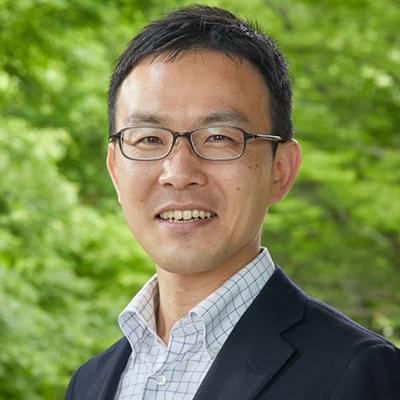
HANASAKI Naota
Head, Climate Change Impacts Assessment Research Section, Center for Climate Change Adaptation, National Institute for Environmental Studies
Naota Hanasaki is Head of Climate Change Impacts Assessment Research Section, Center for Climate Change Adaptation at National Institute for Environmental Studies (NIES). Dr. Hanasaki earned a B.Eng./M.Eng./Dr.Eng. in Civil Engineering from the University of Tokyo. His research focuses on hydrology and water resources engineering, particularly developing a physically-based global hydrological model incorporating human water use and management, such as irrigation, water withdrawal, and reservoir operation. He applies the model to various global water issues, including climate change and sustainable development. He has authored or co-authored more than 180 peer-reviewed research papers. He is a recipient of Clarivate Highly Cited Researcher 2024-2025. He serves as Lead Author of the IPCC's Seventh Assessment Report, Chapter 16 (Water), and is a member of the Executive Editorial Board of Environmental Research Letters and Environmental Research: Water.
Presenter
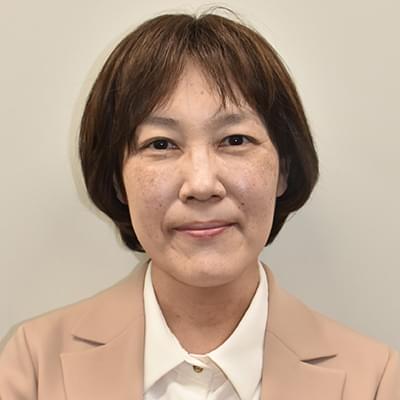
Climate Change Impacts on Weather-Related Disaster Risks in Global Cities
HIRABAYASHI Yukiko
Professor, Department of Civil Engineering, College of Engineering, Shibaura Institute of Technology
Hydrologist and climate change impact researcher with over 20 years of experience in assessing global water cycles, flood risk, water resources, and climate change adaptation. Currently Professor at the Department of Civil Engineering, Shibaura Institute of Technology. Past positions include Assistant Professor at the University of Yamanashi and Associate Professor at The University of Tokyo. Served as a Lead Author of the Sixth Assessment Report of the Intergovernmental Panel on Climate Change (IPCC). Member of the Engineering Academy of Japan and Associate Member of the Science Council of Japan. Former Board Member of the Japan Society of Hydrology and Water Resources and the Japan Society of Civil Engineers. Obtained BE from Shibaura Institute of Technology and PhD in Engineering from The University of Tokyo. Recipient of the IAHS Tison Award in 2009 and the 17th JSPS Prize in 2021.
https://www.db.shibaura-it.ac.jp/~hirabayashi/hyukiko/indexJ.html
Environmental Restoration and Conservation Agency (ERCA): https://www.erca.go.jp/