
Recorded Video
Before viewing
This footage is a direct recording of the meeting proceedings, and therefore it contains parts in both Japanese and English.
Please use the YouTube subtitles (CC) function as needed.
- Click the settings icon at the bottom right of the video screen.
- Select "subtitles" → "English (auto-generated)".
- Under "English (auto-generated)", select "auto-translate" and choose your preferred language.
Note: For example, if you select Japanese, subtitles will not be displayed for Japanese speech, and only the English portions will be shown with Japanese auto-translation.
We appreciate your understanding and cooperation.
A landscape approach offers an effective way to address the interlinked global crises of climate change, pollution and biodiversity loss simultaneously. Therefore, facilitating its adoption across diverse local contexts is key to translating global goals into meaningful action on the ground.
For biodiversity in particular, achieving Target 3 of the Kunming-Montreal Global Biodiversity Framework (KMGBF) requires expanding effectively conserved areas through both Protected Areas and Other Effective Area-Based Conservation Measures (OECMs). Unlike top-down protected areas, OECMs rely heavily on local initiatives, traditional knowledge and sustainable resource management.
In this context, Socio-ecological Production Landscapes and Seascapes (SEPLS), promoted globally under the Satoyama Initiative, offer a key landscape approach to balance biodiversity conservation and human well-being.
This session explores how effective SEPLS management enhances biodiversity and supports OECM recognition. Featuring Satoyama Development Mechanism (SDM) project implementers and government representatives, the session will highlight achievements, share practical lessons, and provide insights for advancing OECMs and sustainable biodiversity management.
Opening remarks
Speakers

Moderator
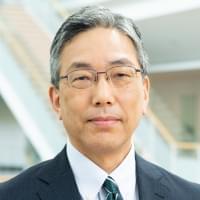
MIWA Koji
Research Manager, Biodiversity and Ecosystem Services Unit, IGES
Presenter
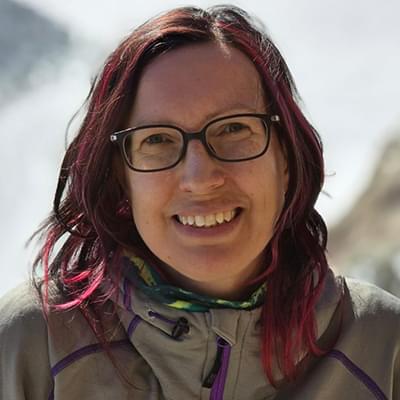
Ulrika ÅBERG
Senior Programme Officer, IUCN
Ulrika Åberg is a Senior Programme Officer with the Protected, Conserved and Heritage Areas Team at IUCN, where she serves as the global coordinator for OECMs. Ulrika is the Team's freshwater focal point and leads IUCN's engagement on the conservation and effective management of Albania's Vjosa River. She also contributes to IUCN's work on Multi-Internationally Designated Areas (MIDAs). She holds a PhD in Geography and has a background in fluvial geomorphology, river restoration, monitoring and evaluation.

Presenter
Andrea CALISPA
Environmental Consultant, Fundación para la Investigación y el Desarrollo Social (FIDES)
Environmental Technician at FIDES. With experience in sustainable community development projects, she has supported and continues to support sustainable community initiatives such as organic rice production, artisanal salt production, and community-based tourism in the Portoviejo River Estuary in Manabí, Ecuador, using an integrative approach that incorporates indigenous and local knowledge.
Presenter
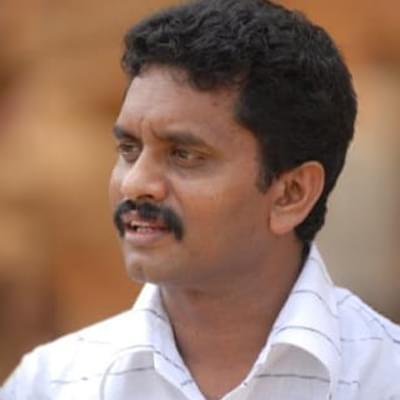
Suranjan KODITUWAKKU
Chairperson / CEO, Green Movement of Sri Lanka (GMSL)
Suranjan Kodituwakku has been one of the foremost thinkers in holistic development in every facet of regenerative socio-environmental and socio-economic models, with 36 years of experience in policy advocacy, conservation and practical application of holistic socio-economic thought. Starting his career as an environmental journalist and creative writer on social issues, as a specialist in setting up holistic models for crisis management, he has been an integral part of the Sri Lankan effort at UNFCC, COPs negotiations and has been a member of the government negotiation team during the core meetings when the climate crisis being debated. His regional and global recognition expanded and was the committee member of the Global Governance Council of the More & Better Campaign, a member of the Regional Governance Council of the Asia-Pacific Research Network, Global Governance Council member of the BACG, Global Governance Council member of the Reality of Aid Network, International Committee member of the NGO Forum of the ADB and Regional Council member of the CDDE. He is on the Presidential task force on Food Security and was the team leader and project manager on the Community Livelihood and Biodiversity Improvement (COLIBRI) project from 2022-2023. In addition, Mr. Kodituwakku currently works as a consultant in Sri Lanka on Other Effective Area-Based Conservation Measures (OECMs), in collaboration with the Ministry of Environment, providing technical and strategic support related to OECM identification, recognition, conservation planning, and related policy and institutional processes. He has also served as member of board of directors of Central Environmental Authority (CEA) (2006-2009) member, Board of Directors Sustainable Energy Authority (SEA) 2010-2012 member, Board of Institute of Local National Steering Committee member of UNDP/GEF/SGP (2004-2010) and (2026-2029) Presently representing steering committee on few UN Conservation based national projects at the Ministry of Mahaweli Development and Environment. He awarded Sri Lanka Green Award for the Best Youth Environmental NGO Leadership in 2002.
Since 2005, he has been involve in finding sustainable adaptive and migratory actions for increasing disasters in Sri Lanka, Closely working with the process of establishing National Disaster Management Center and connecting grass root best practices to the national level. Believing community owned/ community driven processes are the best and sustainable solutions provide to be mentor and implementer of many best practices through CBDRM process.
Presenter
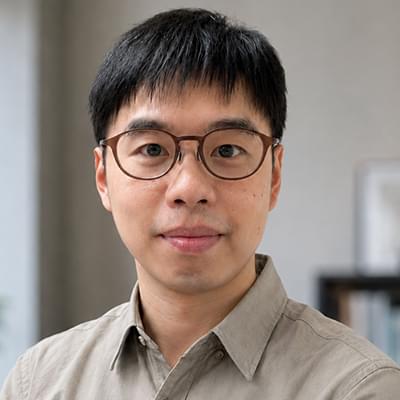
LIN Chi-Che
Section Chief, Community Conservation Section, Forestry and Nature Conservation Agency (FANCA), Taiwan
Section Chief at Taiwan's Forestry and Nature Conservation Agency (FANCA), with a focus on human–wildlife coexistence, incentive-based conservation, and biodiversity-friendly production and value chains. Current work explores how community-based and landscape approaches can connect biodiversity conservation with local livelihoods and strengthen conservation beyond protected areas.

Presenter
FUJIMOTO Hiroki
Deputy Director, Biodiversity Strategy Office, Ministry of the Environment
He works on international biodiversity policy and conservation initiatives. He has managed a range of ecosystem conservation projects, including schemes that provide financial incentives to forest owners for conservation and the protection of endangered species. He currently leads work related to the Satoyama Initiative and the Japan Biodiversity Fund. His background is in ecology, sustainable resource management, and sustainable development.
Closing remarks
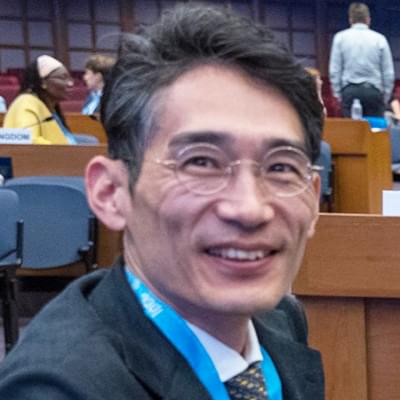
HAISA Yukihiro
Director, Biodiversity Strategy Office, Ministry of the Environment
This event is co-hosted by the Ministry of the Environment, Japan (MOEJ) and the United Nations University Institute for the Advanced Study of Sustainability (UNU-IAS).