
Recorded Video
Before viewing
This footage is a direct recording of the meeting proceedings, and therefore it contains parts in both Japanese and English.
Please use the YouTube subtitles (CC) function as needed.
- Click the settings icon at the bottom right of the video screen.
- Select "subtitles" → "English (auto-generated)".
- Under "English (auto-generated)", select "auto-translate" and choose your preferred language.
Note: For example, if you select Japanese, subtitles will not be displayed for Japanese speech, and only the English portions will be shown with Japanese auto-translation.
We appreciate your understanding and cooperation.
Summary
IGES-CCET organised this session in collaboration with SACEP, SAARC-CCI, the Global Methane Hub (GMH), CCAC and GGGI The session explored how regional cooperation can accelerate methane mitigation and circular economy transitions through regional roadmaps and practical implementation mechanisms.
Presentations highlighted ongoing efforts to develop the ASEAN Methane Reduction Roadmap and the South Asia Regional Roadmap for Waste Methane Mitigation. Speakers emphasised the importance of strengthening policy frameworks, improving measurement, reporting and verification (MRV) systems, mobilising finance, promoting technology transfer and engaging the private sector. South Asia's assessment revealed significant opportunities for methane mitigation through improved waste collection, wastewater treatment, source segregation, composting, recycling and landfill gas capture.
The panel discussion underscored that regional roadmaps must be aligned with national priorities while creating added value through regional collaboration, knowledge sharing and capacity building. Participants also identified that stronger data systems, public-private partnerships and regional cooperation are essential for attracting investment and scaling climate-friendly waste solutions. The session concluded that circular economy approaches and methane action can jointly deliver climate, environmental, public health and socio-economic benefits across South and Southeast Asia.
Panel Discussion
Moderator
HAYASHI Miho
Programme Manager, IGES Centre Collaboration with UNEP on Environmental Technologies (IGES-CCET)

Presenter
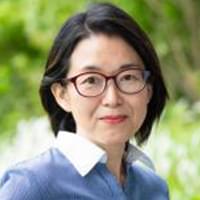
Jihyun KANG
ASEAN-Methane Programme Manager, Global Green Growth Institute (GGGI)
Jihyun Kang is a Program Manager at the Global Green Growth Institute (GGGI), where she leads regional climate cooperation initiatives across ASEAN. She currently manages the ASEAN-Korea Cooperation for Methane Mitigation (AKCMM) programme, overseeing policy dialogue, technical cooperation, and implementation of methane mitigation initiatives in partnership with ASEAN Member States, the ASEAN Secretariat, and international organizations.
Prior to joining GGGI, Ms. Kang worked at the Ministry of Foreign Affairs of the Republic of Korea, where she contributed to climate diplomacy, multilateral environmental cooperation, and ASEAN development cooperation. She also has experience as a consultant and researcher supporting climate change, sustainable development, and climate–health nexus projects.
Presenter
Ngoc-Bao PHAM
Research Director, Sustainable Consumption Production (SCP), IGES
Panelist
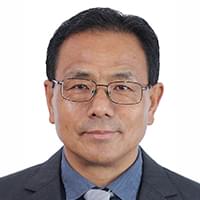
Norbu WANGCHUK
Director General, South Asia Cooperative Environmental Programme (SACEP)
Mr. Norbu Wangchuk serves as the Director General of the South Asia Co-operative Environment Programme (SACEP), bringing over two decades of experience in leadership, governance, and sustainable development.
Mr. Wangchuk holds advanced degrees in business management and education and is a certified trainer in emotional intelligence. He is widely recognized for his ability to foster collaboration, build consensus among diverse stakeholders, and lead with integrity and inclusivity.
Prior to joining SACEP, Mr. Wangchuk held senior leadership positions within the Royal Government of Bhutan, where he played a key role in advancing national development priorities. His work focused on strategic planning, policy coordination, and institutional development across various sectors, including education, energy, and public administration.
He has been involved in several national and regional initiatives supporting renewable energy adoption, infrastructure improvements, and environmentally responsible development. His collaborative work spans engagements with international and multilateral organizations, including UN agencies and regional stakeholders, to promote dialogue and cooperation on cross-border development and environmental issues.
Panelist
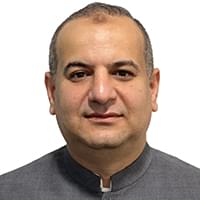
Zulfiqar Ali BUTT
Secretary General, SAARC Chamber of Commerce and Industries (SAARC-CCI)
Zulfiqar Ali Butt is a senior level management professional with diversified experience and knowledge in private sector development. His strong abilities are in the areas of advocacy, training, consultancy, strategic planning, budgeting and financial management, institutional capacity building etc. He have been extensively involved in policy advocacy and organizational development initiatives for the last 17 years with SAARC Chamber of Commerce and Industry.
Zulfiqar has a vast experience of extending support on regional policy advocacy including, regional trade, tourism, regional investment, socio-economic issue like climate change, poverty reduction investment policies and entrepreneurship development. He has been organizing conferences/seminars/roundtables, capacity development programs, create strong liaison with public/private sector organizations & academia and diplomatic missions.
Zulfiqar has a strong academic background in Business Management with a Postgraduate Degree in International Business Management from Mälardalen University, Sweden. Currently he is working as Secretary General at SAARC Chamber of Commerce and Industry.
Panelist
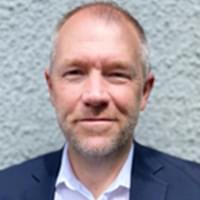
Donovan STOREY
Manager, CCAC Technology and Economic Assessment Panel (CCAC-TEAP), Waste and Climate Expert, Climate and Clean Air Coalition (CCAC), UNEP
Donovan Storey is currently the Technology and Economic Assessment Panel (CCAC-TEAP) manager, and waste expert, at the Climate and Clean Air Coalition, hosted by UNEP. In his capacity Donovan supports the TEAP to develop and share knowledge with countries on promising, innovative and underfinanced short-lived climate pollutant (SLCP) mitigation technologies which can improve both climate and air quality outcomes. He has recently also worked as a lead author to the IPCC report on SLCP methodologies to be published in 2027, and as an expert reviewer for the Biennial Transparency Report (BTR) process of the UNFCCC. Prior to joining CCAC Donovan worked in senior capacities in international and diplomatic organisations having started his career as an academic specializing in urbanization. Donovan has extensive work experience in Asia, Africa and the Pacific Islands. He holds a PhD in International Development and a Master of Laws, in Public International Law.
In collaboration with:
- South Asia Co-operative Environment Programme (SACEP)
- SAARC Chamber of Commerce & Industry (SAARC-CCI)
- Global Methane Hub (GMH)
- Climate and Clean Air Coalition (CCAC) and
- Global Green Growth Institute (GGGI).